
Redistricting on Trial: Louisiana Defends Its Map
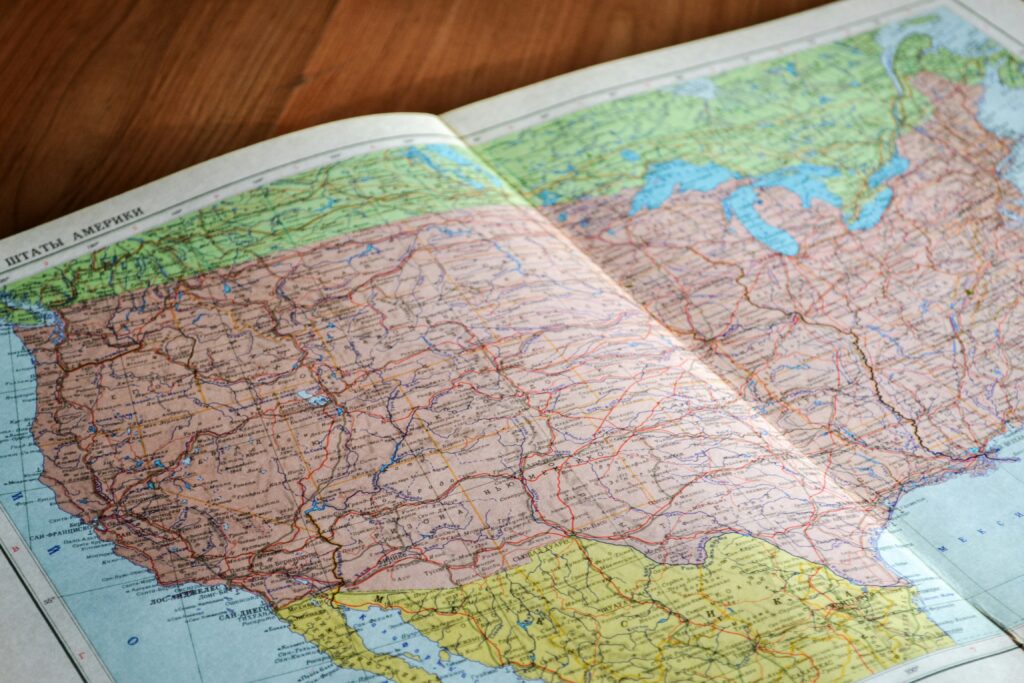
Ioann-Mark Kuznietsov, Unsplash
Louisiana has six seats in the U.S. House of Representatives. For years, the state had only one district where black voters made up the majority, even though black residents make up about one-third of Louisiana’s population. Many civil rights groups argued that this left black voters with less opportunity to elect candidates of their choice. They said this violated Section 2 of the Voting Rights Act, which protects against racial discrimination in voting.
In 2022, lawsuits were filed against the state, and federal courts agreed that Louisiana’s old map likely violated the VRA. Judges told the state legislature to come up with a new plan. In 2024, lawmakers passed a new map, called Senate Bill 8 (SB 8). This map created two majority-black districts instead of just one. Supporters of SB 8 said it finally gave fair representation. But not everyone agreed. A group of voters filed a new lawsuit, arguing that SB 8 itself was unconstitutional. They said the legislature drew the second black district mainly because of race, stretching it hundreds of miles to connect distant black communities. In their view, that kind of racial gerrymandering violated the Equal Protection Clause of the Fourteenth Amendment. This case is now known as Louisiana v. Callais, and it has made its way to the U.S. Supreme Court.
What the Lower Court Said
A special three-judge federal court in Louisiana took up the case and, in a 2-1 ruling, struck down SB 8. The majority argued that lawmakers relied too heavily on race when creating the second black district, pointing to its unusual shape as evidence. But this view treated the legislature’s work as suspect simply because it sought to balance federal demands with state realities.
One judge dissented, recognizing that Louisiana’s elected representatives had acted responsibly to comply with the Voting Rights Act while still carrying out their constitutional duty to draw districts. Nevertheless, the majority opinion carried the day, and SB 8 was blocked. Louisiana then appealed to the U.S. Supreme Court, explaining that without SB 8 the state would have no legal map at all—an outcome that would throw its elections into disarray and undermine the authority of its legislature.
What the Supreme Court Did
The Supreme Court faced a big choice. If it let the lower court ruling stand right away, Louisiana would have to draw yet another map, and elections could be thrown into chaos. Instead, the Court allowed SB 8 to remain in place temporarily. That meant the map with two majority-black districts was used for the 2024 elections.
But the Court did not leave the issue there. After hearing arguments in March 2025, the Justices took an unusual step. On June 27, 2025, they ordered the case to be reargued during the next Court term, starting in October. That signaled the Justices wanted to think more deeply about the core constitutional questions.
The Big Questions for the Supreme Court
The Supreme Court wants both sides to answer tough questions when the case is brought forward. These include: Can a state intentionally create a majority-minority district without violating the Constitution? How should courts balance the requirements of the Voting Rights Act with the Equal Protection Clause of the Fourteenth Amendment? Does drawing a map to help black voters, even with good intentions, count as unconstitutional racial gerrymandering?
At the heart of the case is a tension: the Voting Rights Act sometimes requires states to consider race to prevent discrimination, but the Constitution limits how much race can drive government decisions. Louisiana v. Callais will test where that line should be drawn.
Why This Case Matters Beyond Louisiana
This case is not just about Louisiana. It is about how much freedom state legislatures should have to draw maps that reflect the needs and interests of their people. At its core, redistricting is meant to serve the common good by ensuring fair representation, stable elections, and trust in the process. If the Court sides with the challengers, it could sharply limit how states design their maps, creating constant lawsuits and uncertainty every election cycle.
If the Court upholds Louisiana’s map, it will affirm that legislatures can use their constitutional authority to balance local interests, protect communities, and provide voters with clear, predictable districts. The ruling will set the tone for how states across the country handle redistricting in the years ahead.
The Voting Rights Act and the Constitution
To understand the stakes, it helps to look at the laws involved. Section 2 of the Voting Rights Act requires states to ensure fair access to the ballot box and prohibits election rules that intentionally weaken citizens’ voices. At the same time, the Equal Protection Clause of the Fourteenth Amendment makes clear that government cannot sort or divide people based primarily on race. The Supreme Court has consistently warned that race should not drive redistricting unless there is an extraordinary reason.
For years, these two standards have been used to push and pull states in opposite directions. Draw districts one way, and states risk being accused of ignoring the Voting Rights Act. Draw them another way, and states face lawsuits for racial gerrymandering. The real issue is whether legislatures will be free to draw districts that serve the common good—protecting communities, ensuring stability, and respecting constitutional limits—without federal courts second-guessing their every move. Louisiana v. Callais is the latest and perhaps most important example of this struggle.
What Happens Next
The Supreme Court will hear re-arguments in October 2025, with a decision likely by spring 2026. In the meantime, Louisiana will continue using the SB 8 map with two majority-black districts. What makes this case important is not just the map itself but how the Justices choose to balance federal law with constitutional limits. Justice Clarence Thomas and others have already raised concerns about stretching the Voting Rights Act beyond what the Constitution allows, while some members of the Court have been more willing to uphold its broad reach in past cases. By calling for another round of arguments, the Court signaled that it understands the weight of this decision. The outcome could either restore confidence in the authority of states to draw their own maps or further entangle legislatures in endless legal challenges.
Why People Are Talking About It
This case has sparked strong reactions from all sides. Civil rights groups argue that striking down SB 8 would take away fair representation for black voters. Opponents say the map goes too far and gives race an unconstitutional role in the political process.
2/ Louisiana v. Callais could be the biggest case on gerrymandering in decades.
At stake: whether federal courts can force states to create “majority-black” districts — which just happen to be safe Democrat seats. pic.twitter.com/1CyNeh8CRY
— Rod D. Martin (@RodDMartin) August 8, 2025
Louisiana v. Callais is not just a battle over one map. It is a test of how the Court will handle the pushback against gerrymandering that Democrats have pushed for decades, for the entire country. The Supreme Court’s final word could set the direction of election law for decades.
Contacting your representatives should be easy, but there are myriad ways they can ignore your messages. That’s where we come in.
Yes, Million Voices helps you with voter guides. Yes, we send letters from YOU directly to your elected officials because it’s the only way to guarantee they’ll listen to you. Yes, we publish data, articles, text messages, and help bridge the gap between education and civic action. But what do you want? Tell us today.
We want to make YOU the hero of our American story by giving you the tools you need to make a difference, from your local, state, all the way up to the federal level.
Join us in our mission to advocate for religious freedom, support fair and secure elections, and uphold the values that this great nation was built upon. Tell us what you want from the next four years, and we will fight to make it a reality … again!
Share on these platforms:
Million Voices is a movement that gives voters and potential voters the foundation they need to confidently act from a biblical worldview.