
A 232-Year Tradition Ends as the Penny Is Retired
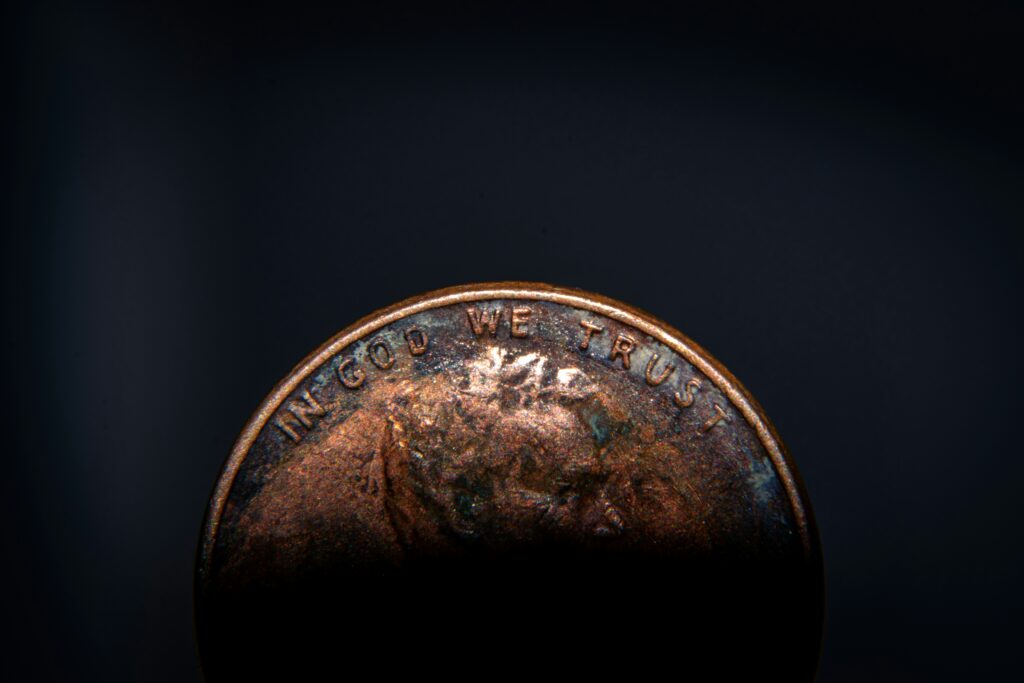
Adam Nir, Unsplash
In a historic moment for the nation, the United States Mint pressed its final circulating one-cent coin at its Philadelphia facility on November 12, 2025, as confirmed in an official announcement from the U.S. Mint. The ceremonial strike marked the end of more than 230 years of continuous penny production.
This decision followed a formal economic review by the Treasury Department, which determined that the penny no longer makes financial sense to produce. According to a detailed report from Fox Business, each penny now costs more than 3.5 cents to mint, meaning the government was losing money on every coin created.
While pennies will remain legal tender, no new ones will enter circulation. Coverage by the New York Post described the Philadelphia Mint preparing the final batch and noted that the last pennies will be preserved in the Mint’s permanent collection as historical artifacts.
What seems like a tiny story actually represents a major economic milestone. It reflects how inflation, digital payments, and modern commerce have reshaped America’s understanding of currency. The penny’s end symbolizes adaptation, an acknowledgment that economies evolve and values shift.
Honest Weights, Honest Measures
Scripture speaks clearly about integrity in value and exchange. Proverbs 11:1 teaches, “A false balance is an abomination to the Lord, but a just weight is His delight.” Leviticus 19:36 reinforces this principle: “You shall have just balances, just weights.” These are principles that the United States government established our system of currency from the beginning, and coined money for centuries.
In a practical sense, the penny had become a “false balance.” It cost more to create than it was worth. Economic analysis from Newsmax highlighted how the government was losing millions annually producing a coin that no longer held real utility. Ending its production restores financial honesty, aligning cost with true value.
For generations, the penny symbolized thrift and simplicity. Yet stewardship requires re-evaluating systems when they no longer reflect reality. The penny’s retirement is a reminder that even longstanding traditions must sometimes give way to honest assessment and practical wisdom.
Why Ending the Penny Makes Economic Sense
When the penny was created in 1793, it held meaningful purchasing power. However, modern economic analysis from the Daily Wire shows that its usefulness has dropped to near zero. Most pennies end up in jars, glove compartments, or the bottoms of purses—rarely circulating meaningfully in the economy.
Ending the penny is expected to save taxpayers more than $56 million per year, based on cost projections outlined in the Fox Business economic breakdown. While this is a small fraction of federal spending, it is a critical demonstration of responsible stewardship and fiscal discipline.
This change also affects cash transactions. Reporting from CBN News explains that retailers will begin rounding purchases to the nearest five cents. Digital payments, however, remain unaffected because electronic systems can process exact amounts.
The U.S. Mint notes that more than 300 billion pennies already exist in circulation, meaning the transition will occur gradually. Even as production ends, the penny will stay in use for years as older coins slowly phase out.
Far from being a sign of decline, this shift reflects growth. Inflation, technology, and spending habits have changed dramatically. The penny’s retirement underscores how currency must evolve to match present-day economic reality.
A Reflection of the Times
The final penny ceremony at the Philadelphia Mint drew historians, economists, and officials who understood the moment’s significance. Coverage from the New York Post described the event as both nostalgic and necessary.
For centuries, the penny carried images of liberty, national pride, and presidential history. Ending it does not erase that legacy; it acknowledges how society has changed. As CBN News noted in its reporting, the rise of digital payments means fewer Americans rely on cash today. Coins simply no longer occupy the place they once did.
Removing the penny streamlines business operations, reduces transportation and handling costs, and simplifies cash transactions. It also reflects shifting national priorities. Inflation remains high, but eliminating the penny does not signal decline; it signals adaptation. Not every tradition endures simply because it is old.
Stewardship in a New Economic Era
Across social media, Americans have reacted with a mix of nostalgia and acceptance. Some mourn the loss of a cultural symbol, while others celebrate the move as long overdue.
But this moment is about more than currency. It is about how nations manage growth, how economic values evolve, and how individuals steward their resources. The biblical principle of “just weights and measures” remains a timeless reminder that honesty and value must align.
The penny’s retirement challenges us to evaluate our systems, traditions, and habits. It encourages us to consider whether the things we hold onto still serve their purpose.
What may seem like the end of a tiny coin is actually the beginning of a new fiscal chapter. America’s smallest denomination now carries a big message: value what matters, measure with honesty, and steward wisely. In a time of uncertainty and inflation, that lesson is worth far more than one cent.
Contacting your representatives should be easy, but there are myriad ways they can ignore your messages. That’s where we come in.
Yes, Million Voices helps you with voter guides. Yes, we send letters from YOU directly to your elected officials because it’s the only way to guarantee they’ll listen to you. Yes, we publish data, articles, text messages, and help bridge the gap between education and civic action. But what do you want? Tell us today.
We want to make YOU the hero of our American story by giving you the tools you need to make a difference, from your local, state, all the way up to the federal level.
Join us in our mission to advocate for religious freedom, support fair and secure elections, and uphold the values that this great nation was built upon. Tell us what you want from the next four years, and we will fight to make it a reality … again!
Share on these platforms:
Million Voices is a movement that gives voters and potential voters the foundation they need to confidently act from a biblical worldview.