
Minnesota Erupts as Walz Hit With $1B Fraud Accusation
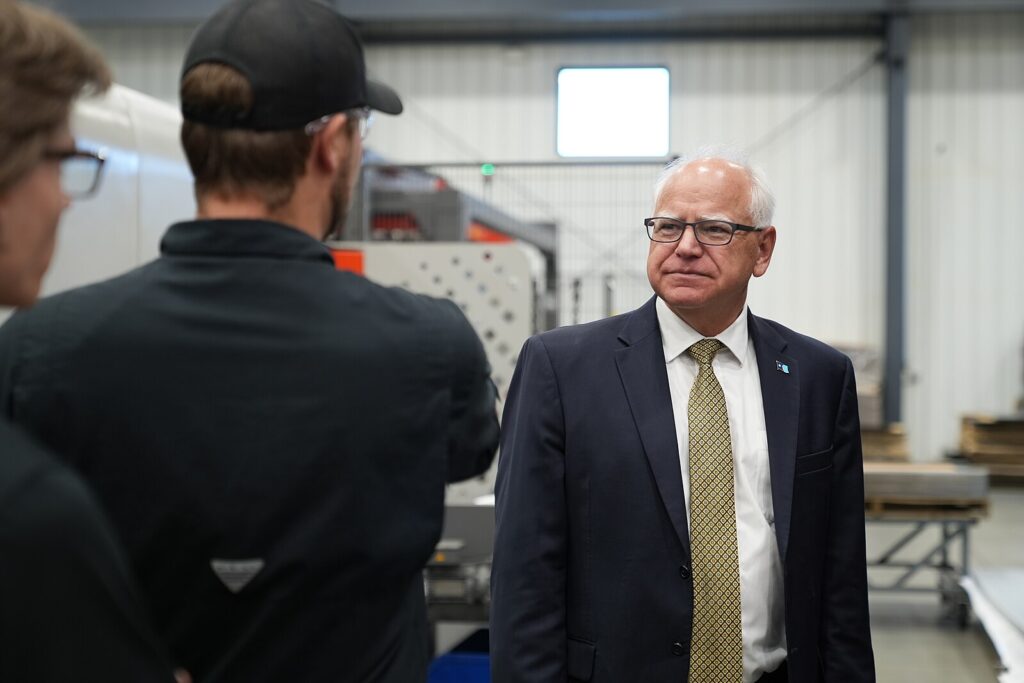
Governor Tim Walz at Bemidji Steel, Wikimedia Commons
The political pressure on Minnesota Gov. Tim Walz intensified this week after hundreds of social-service workers publicly declared he is “100% responsible” for a massive $1 billion fraud scandal inside the state’s welfare system. Their accusations surfaced after investigators uncovered widespread pandemic-era fraud tied to fake meal-service reimbursements and other bogus social-service programs. The outcry has moved far beyond internal frustration; it has sparked a statewide firestorm.
According to reporting from the New York Post, employees inside the Minnesota Department of Human Services (DHS) say that warnings were repeatedly raised but ignored by the governor’s administration. Workers allege the system lacked even basic oversight, allowing dozens of nonprofit groups and contractors to submit false claims with little scrutiny. Their frustration reached a breaking point when the scandal became national news, and the public learned how much taxpayer money had vanished.
Many of the fraudulent organizations billed the state for feeding thousands of children during the pandemic, children who did not exist, or who were never served a single meal. Prosecutors have brought charges against dozens of people, and at least 59 convictions have already been secured. But for DHS staff, the problem isn’t just the criminals. They say the scandal reflects years of poor leadership and a refusal to confront red flags early.
A Viral Public Rebuke and a Governor on the Defensive
The controversy exploded after DHS employees publicly posted their statement accusing Walz of direct responsibility. Their message, amplified by a viral thread from journalist Nick Sortor, declared that the governor “failed to act” even as fraud multiplied across multiple programs. The criticism spread rapidly after the viral X post gained traction and drew national attention.
🚨 WTF?! Tim Walz is on NBC RUNNING COVER for the Somalis who stole BILLIONS of taxpayer dollars in Minnesota — much of which was funneled to TERRORISTS
“Don’t demonize an entire community! It’s lazy!”
The race card NO LONGER WORKS, Tim. Somalis MUST go back! They don’t add —… pic.twitter.com/9PXjULT9p4
— Nick Sortor (@nicksortor) November 30, 2025
This surge of visibility forced reporters to question Walz directly. He pushed back hard, saying he does “take responsibility,” but insisted responsibility means prosecuting criminals, not accepting blame for administrative failures. In coverage highlighted by Fox News, Walz argued he has aggressively pursued fraudsters and claimed his critics are distorting the story for political gain.
Walz also dismissed claims that the scandal unfairly reflects on Minnesota’s Somali community, warning against “demonizing an entire community” based on the actions of a few individuals. But his critics say that is not the issue. The concern, they argue, is widespread mismanagement and a lack of urgency at the leadership level, not ethnicity.
The New York Times reported that the scandal has created deep divides within the state, including among lawmakers and community leaders. As questions grow about how pandemic relief funds were managed, the debate has shifted from simple oversight problems to a broader crisis of public trust. Those tensions continue to rise as the investigation expands and more details emerge.
Walz Faces Backlash From His Own Party as Trust Collapses
The most politically damaging development may be the growing criticism from within Walz’s own party. According to the New York Post, Democratic staffers and lawmakers increasingly believe the scandal has eroded public confidence and could have lasting consequences statewide. Some say Walz’s public messaging, which appears to downplay administrative responsibility, has made the crisis even more severe.
These internal frustrations are striking in a state where party unity is usually strong. DHS workers say they raised alarms repeatedly, asking for tighter oversight and updated reporting measures, but their warnings were ignored or pushed aside. Their open criticism now reflects not only anger, but a belief that accountability was actively avoided by those at the top.
Meanwhile, community leaders worry the scandal will damage Minnesota’s safety-net programs for years. Families who rely on assistance for meals, housing support, or other essential services may feel unsure about whether the system can still be trusted. Every public dollar lost to fraud represents real resources taken away from vulnerable people, a fact that has only deepened public outrage.
Financially, the fallout could reshape the state’s budget. A billion dollars in fraud is not simply a statistic; it leaves a permanent hole in Minnesota’s finances. Lawmakers are bracing for intense budget negotiations as they determine how to absorb the loss, while prosecutors continue to investigate suspects tied to the scheme. The New York Times notes that new charges are still possible as the investigation widens.
DHS employees say the state must commit to real reforms, not just criminal prosecutions. Their proposals include stronger internal audits, more transparent oversight processes, and improved protections for whistleblowers. Without these changes, they argue, Minnesota could easily face another crisis just like this one.
A Crisis That Won’t Go Away
The accusations from Minnesota’s own social-service workers are unprecedented and devastating. When the employees responsible for administering aid say the governor is “100% responsible,” the issue becomes far more than a legal problem. It becomes a crisis of trust, competence, and leadership.
Walz now faces the most serious political challenge of his career. The fraud scandal has escaped the confines of bureaucratic paperwork and courtroom filings. It is now viral online, prominently featured across major news outlets, and widely discussed in Minnesota communities. Whether voters believe Walz’s claim that he is “taking responsibility,” or whether they see the DHS workers’ accusations as the real story, will determine where the scandal goes next.
Until Minnesota sees genuine transparency and accountability, not defensive press conferences or shifting explanations, the damage to public confidence will only deepen.
Contacting your representatives should be easy, but there are myriad ways they can ignore your messages. That’s where we come in.
Yes, Million Voices helps you with voter guides. Yes, we send letters from YOU directly to your elected officials because it’s the only way to guarantee they’ll listen to you. Yes, we publish data, articles, text messages, and help bridge the gap between education and civic action. But what do you want? Tell us today.
We want to make YOU the hero of our American story by giving you the tools you need to make a difference, from your local, state, all the way up to the federal level.
Join us in our mission to advocate for religious freedom, support fair and secure elections, and uphold the values that this great nation was built upon. Tell us what you want from the next four years, and we will fight to make it a reality … again!
Share on these platforms:
Million Voices is a movement that gives voters and potential voters the foundation they need to confidently act from a biblical worldview.