
SCOTUS Debates Gun Rights for Drug Users
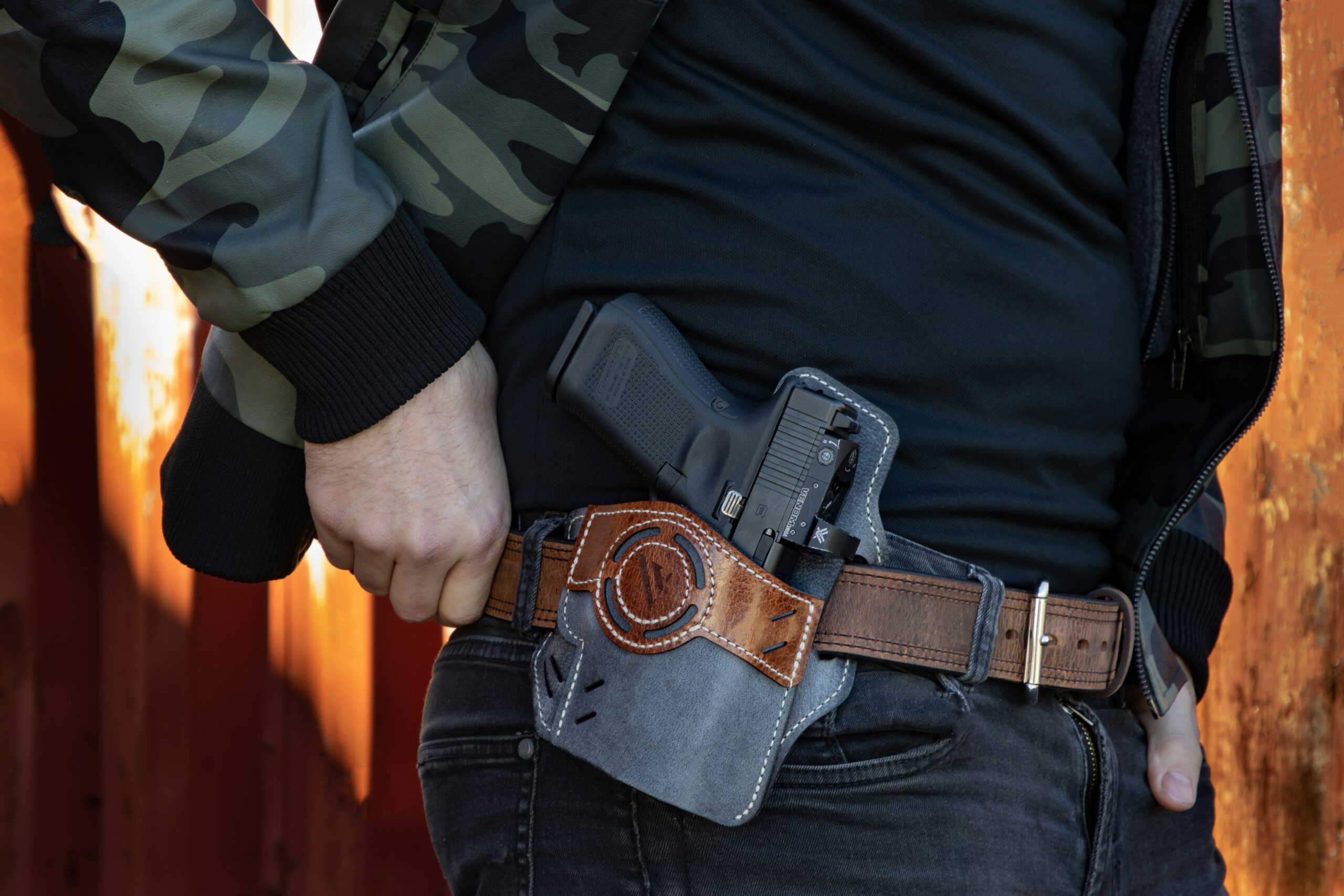
Seeetz, Unsplash
The Supreme Court is currently deliberating a case that strikes at the heart of our constitutional rights. A federal law that bars habitual users of illegal drugs from owning firearms is under intense scrutiny. The outcome of this case could redefine the boundaries of the Second Amendment and impact millions of Americans.
This case forces us to ask fundamental questions about our liberties. Where does the government’s power to regulate end and an individual’s God-given right to self-defense begin?
The case, United States v. Hemani, involves a Texas man who admitted to regularly using marijuana. He was charged under a 1968 law that makes it a felony for an “unlawful user of or addicted to any controlled substance” to possess a firearm. The core issue is whether this law infringes upon his Second Amendment rights.
This is more than a legal debate; it is a spiritual one. The right to protect oneself and one’s family is a principle rooted in our understanding of stewardship and responsibility. We are called to be vigilant guardians of the freedoms that have been entrusted to us.
The Constitutional Crossroads
During oral arguments, the justices appeared divided, raising questions that probe the very foundation of the law. The Trump administration argued that the government has a right to temporarily disarm individuals who pose a threat to public safety, similar to historical laws regarding “habitual drunkards.” This argument attempts to ground the modern law in a historical tradition, a key test established by the Supreme Court in its 2022 Bruen decision. According to SCOTUSblog, the case centers on the question of whether being a regular marijuana user is enough to justify stripping away one’s Second Amendment rights.
However, several justices expressed skepticism. Justice Neil Gorsuch pointed out that some of our nation’s founders, like John Adams and James Madison, consumed alcohol daily. Would they have been disarmed under today’s standards? This highlights the danger of applying vague, modern labels to historical contexts.
The debate also turned to the definition of an “unlawful user.” Justice Amy Coney Barrett questioned whether using marijuana a few times a week automatically makes someone dangerous. She also noted that many legal, prescribed drugs like Ambien or Adderall could be misused, blurring the lines of what constitutes a dangerous user.
This ambiguity is deeply concerning. Laws that are unclear or overly broad can easily be used to strip law-abiding citizens of their rights without due process. It is a foundational principle of justice that laws must be clear so that ordinary people can understand what is prohibited. Vague laws invite arbitrary enforcement, which is a hallmark of tyranny, not a free republic.
The government’s position could open a door to disarming millions of Americans for behaviors that do not necessarily indicate a risk of violence. We must pray for clarity and wisdom for the justices as they consider these profound implications.
Historical Precedent and Modern Reality
The case of Ali Danial Hemani is at the center of this legal battle. As detailed by KSL, his lawyer argued that the law is unconstitutionally vague and lacks a solid historical precedent. The defense contended that while the government can prohibit someone from carrying a firearm while intoxicated, it cannot strip a person of their right to own a gun for occasional, private use of a substance.
The argument is that historical laws targeting “habitual drunkards” applied to those whose lives were consumed by alcohol, not to every person who drank regularly. To equate the two would be to misread history and create a standard that could disarm a significant portion of the population. This is a critical distinction in a nation where many states have legalized marijuana for medical or recreational use.
The Trump administration is defending the law, but it’s important to note that this creates a complex position. The administration has generally supported expansive gun rights, but here it argues for a specific federal restriction. This case even touches on the recent conviction of Hunter Biden for a similar offense, showing that the law’s reach is broad and politically relevant.
As citizens, we have a duty to understand the principles upon which our nation was built. The Second Amendment is not a second-class right; it is a cornerstone of our liberty. It ensures that the people can protect themselves from all threats, both foreign and domestic. Any law that seeks to limit this right must be met with the highest level of scrutiny. We must stand for the clear and original meaning of the Constitution.
The court’s decision, expected by this summer, will have far-reaching consequences. It will either affirm the government’s power to restrict gun ownership based on substance use or reinforce the Second Amendment rights of millions. Let us watch, pray, and be prepared to use our voices to defend our freedoms, no matter the outcome.
Contacting your representatives should be easy, but there are myriad ways they can ignore your messages. That’s where we come in.
Yes, Million Voices helps you with voter guides. Yes, we send letters from YOU directly to your elected officials because it’s the only way to guarantee they’ll listen to you. Yes, we publish data, articles, text messages, and help bridge the gap between education and civic action. But what do you want? Tell us today.
We want to make YOU the hero of our American story by giving you the tools you need to make a difference, from your local, state, all the way up to the federal level.
Join us in our mission to advocate for religious freedom, support fair and secure elections, and uphold the values that this great nation was built upon. Tell us what you want from the next four years, and we will fight to make it a reality … again!
Share on these platforms:
Million Voices is a movement that gives voters and potential voters the foundation they need to confidently act from a biblical worldview.