
Supreme Court to Decide the Future of Women’s Sports
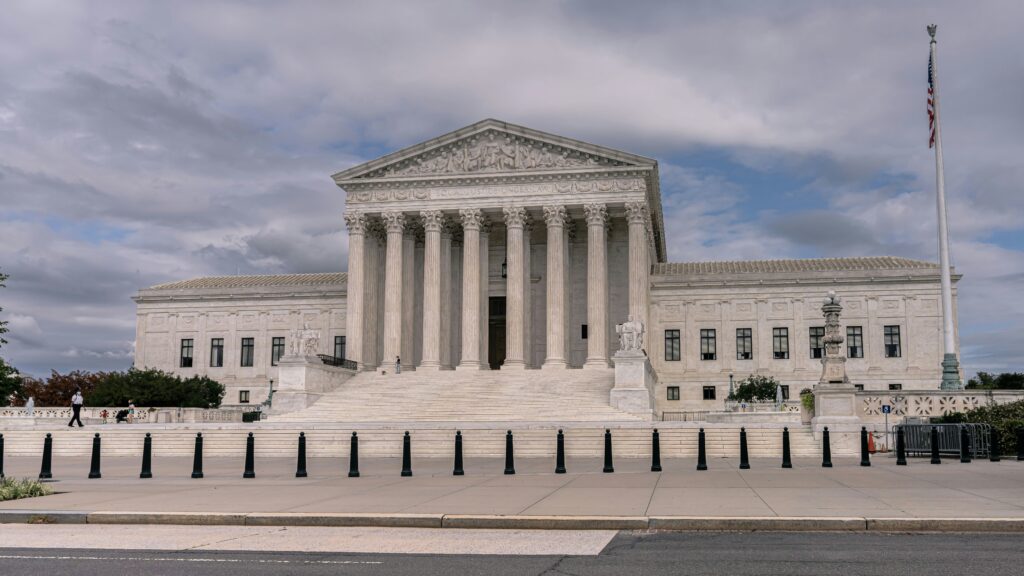
Adam Michael Szuscik, Unsplash
Little v. Hecox is one of a pair of cases the U.S. Supreme Court agreed to hear that challenge laws in Idaho, and in parallel West Virginia, which require that schools designate sports teams for females on the basis of biological sex. These laws prohibit males, those assigned male at birth, regardless of gender identity, from competing on women’s sports teams.
The questions before the Court are whether such laws violate Title IX, the federal law that prohibits sex discrimination in educational programs receiving federal funds, and whether they violate the Equal Protection Clause of the Fourteenth Amendment.
In Idaho, lawmakers passed the Fairness in Women’s Sports Act, which defines eligibility for female sports as those biologically female. The law was quickly challenged by a student who identifies as female but was born male. A district court issued a preliminary injunction against enforcement, and the Ninth Circuit affirmed it. Meanwhile, West Virginia enacted a similar law, with its own complex path through the courts. Together, these cases now arrive at the Supreme Court, which must decide whether states have the authority to enforce laws that define female sports participation by biological sex rather than gender identity, as explained in a Federalist Society briefing.
More Than Sports
At the heart of this case lies the meaning of categories like “male” and “female” in American law and culture. The concern is that if gender identity, a subjective and deeply personal self-perception, must replace biological sex in law, then the stability and clarity of legal categories are undermined. Sports present the clearest example of why this matters: differences between the sexes in strength, speed, bone density, and endurance are well-documented. To set aside those realities in favor of a purely subjective identity undermines fairness and erodes the very reason women’s sports were created.
Protecting opportunities for female athletes is another central concern. If biological males are permitted to compete in women’s sports, female athletes risk losing not only competitions, but also access to team spots, records, scholarships, and recognition. This undercuts Title IX’s original mission to expand and protect women’s athletic opportunities. Many female athletes and advocacy groups see Idaho’s law as essential to preserving the fairness Title IX was designed to secure, according to Alliance Defending Freedom, which represents several women athletes.
There is also the matter of respecting the role of legislatures in making laws. Idaho’s elected representatives passed the Fairness in Women’s Sports Act through the democratic process. Courts, conservatives argue, should be cautious about substituting contested academic theories of gender for the will of the people, especially when the Constitution does not clearly compel such a move. From this perspective, legislatures are better suited to weigh cultural and scientific debates about sex and gender, while courts should avoid acting as super-legislatures imposing ideology.
The cultural implications stretch far beyond sports. For many Christians, the categories of male and female are not arbitrary or socially constructed, but rooted in creation itself. Genesis declares that God made humanity “male and female.” Preserving those distinctions is not only practical for fairness in athletics but also an act of faithfulness to God’s design. This case, then, is about more than who runs on a track team; it is about whether society acknowledges and honors the natural order God has established. Alliance Defending Freedom President Kristen Waggoner noted on X that the Court now has the opportunity to “preserve equal opportunity for female athletes,” highlighting the stakes for both law and culture.
What the Brief Highlights
The Equal Protection Project’s amicus brief emphasizes several key points. It argues that gender identity is a relatively recent and contested academic concept, not something that has long-standing legal or scientific consensus. The brief stresses that classifications based on biological sex are objective, measurable, and substantially related to important state interests like fairness in athletics.
The authors warn that courts treating terms like “cisgender” or “sex assigned at birth” as if they are uncontested facts undermines the rule of law. They caution that if subjective identity becomes the basis for defining legal categories, there is no logical stopping point, and the ripple effects will extend far beyond sports. Such a shift could weaken protections for women in other areas of law and make it harder to draw lines that ensure fairness.
Potential Impact Nationwide
The Court’s decision will have sweeping consequences. If the justices uphold laws like Idaho’s, states will have clear authority to define sex for athletic eligibility according to biology, and Title IX will not be reinterpreted to require recognition of gender identity in this context. Schools and athletic organizations would have firmer ground to protect fairness in women’s sports.
If the Court goes the other way, states may be compelled to rewrite laws and policies to allow biological males who identify as female to participate in women’s sports. That outcome would ripple across K-12 schools, colleges, and athletic associations, creating legal liability and forcing administrators to navigate contested definitions of sex and gender. The debate would not stop with athletics, but would inevitably spill into other areas such as bathrooms, locker rooms, prisons, and beyond.
For religious believers and institutions, the ruling will carry deep symbolic meaning. A decision affirming biology as the standard for sex distinctions would support the view that law can and should reflect creation’s reality. It would encourage Christians who believe that honoring God means acknowledging the order He set forth in making humanity male and female. On the other hand, a decision privileging gender identity would intensify cultural tensions, setting up new conflicts between conscience rights and progressive legal mandates.
Affirming Common Sense
Christians see in this debate not just a legal issue, but a theological one. Upholding biological categories reflects what God has revealed in Scripture about human nature. Protecting women’s sports is not only a matter of fairness but also a recognition of God’s good design. Whatever the Court decides, believers are reminded that cultural battles are ultimately spiritual ones. Standing for truth in love glorifies God, and affirming the reality of male and female honors Him as Creator.
As the Supreme Court considers Little v. Hecox, the stakes are both legal and cultural. The justices will decide whether states can lawfully enforce distinctions rooted in biological sex, or whether they must yield to arguments for gender identity. The decision will reverberate through schools, sports, legislatures, and churches. This case is not only about fairness on the playing field, but about whether society still acknowledges God’s created order. The Court’s ruling will not end the debate, but it will shape the ground on which future debates are fought.
Contacting your representatives should be easy, but there are myriad ways they can ignore your messages. That’s where we come in.
Yes, Million Voices helps you with voter guides. Yes, we send letters from YOU directly to your elected officials because it’s the only way to guarantee they’ll listen to you. Yes, we publish data, articles, text messages, and help bridge the gap between education and civic action. But what do you want? Tell us today.
We want to make YOU the hero of our American story by giving you the tools you need to make a difference, from your local, state, all the way up to the federal level.
Join us in our mission to advocate for religious freedom, support fair and secure elections, and uphold the values that this great nation was built upon. Tell us what you want from the next four years, and we will fight to make it a reality … again!
Share on these platforms:
Million Voices is a movement that gives voters and potential voters the foundation they need to confidently act from a biblical worldview.