
Utah Redistricting Ruling Sparks Judicial Power Debate
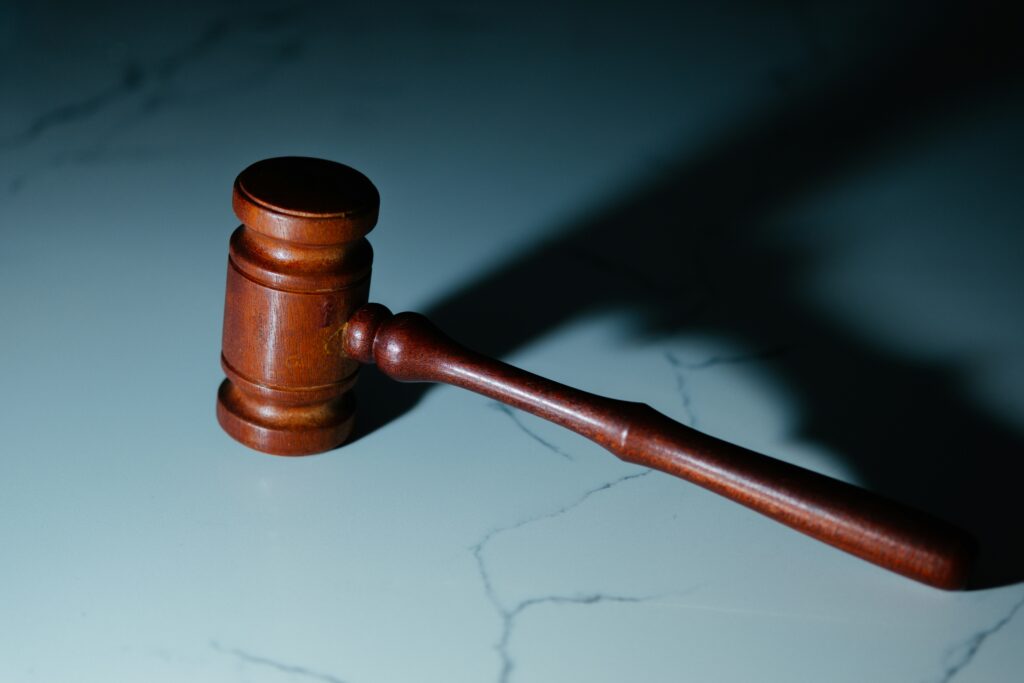
Wesley Tingey, Unsplash
In November 2025, Utah found itself at the center of a national debate over judicial power. Judge Dianna Gibson of the 3rd District Court rejected the congressional map drawn by the Republican-controlled legislature and replaced it with one proposed by the plaintiffs in a redistricting lawsuit. That map gives Democrats a real chance to win a U.S. House seat in a state long considered safely Republican. The Associated Press reported that this decision “boosts Democrats in a red state,” while critics quickly labeled it a political move cloaked in legal reasoning.
Some view the ruling as a correction of partisan gerrymandering. Others see it as a textbook example of judicial activism, when courts cross from interpreting the law into making it. This case has revived one of the oldest questions in American governance: should judges be referees or rule-makers?
When Judges Take the Pen from Legislators
The backstory goes back to 2018, when Utah voters passed Proposition 4, creating an independent redistricting commission to draw fair boundaries. But after the legislature repealed key parts of that law and redrew the map in 2021, critics said the new version split Salt Lake County across multiple districts, diluting the state’s only major Democratic population. In 2025, Judge Gibson ruled that this repeal violated the rights of voters and ordered lawmakers to fix it.
When the legislature submitted a new map in October, she found it still didn’t meet the fairness standards established by Proposition 4. Instead, she approved the plaintiffs’ map outright. Utah News Dispatch noted that her ruling landed just hours before the state’s election deadline, effectively cementing the new districts for the 2026 elections.
Supporters say Gibson’s action restored voter intent and upheld Utah’s own constitutional guarantees of equal representation. But to many in the legislature, it looked like something else entirely. KUTV News quoted Representative Candice Pierucci, who serves as co-chair of the redistricting committee: “This is a clear example of judicial activism. One unelected judge decided that her personal opinion outweighs Utah’s Constitution and the will of the people.”
Her statement echoed a larger frustration shared by many conservatives who see courts increasingly reshaping state policy. The Blaze called the Utah decision “a gift to Democrats in a red state,” warning that such rulings chip away at legislative authority.
The Question of Judicial Activism
The term “judicial activism” describes moments when judges interpret the law so broadly that they effectively create new policy. Historically, the judiciary has acted as a check on the other branches, but never their substitute. In Utah’s case, Judge Gibson didn’t just reject a law; she imposed her own version of one, choosing a congressional map herself rather than sending it back to the legislature for revision.
That act blurred the lines between enforcement and creation. Lawmakers, elected by the people, are accountable at the ballot box. Judges, by contrast, hold power longer and often with less direct accountability. When courts take over legislative responsibilities, like redistricting, they risk undermining the separation of powers that preserves the American republic.
Even those who support reform admit the optics are complicated. Reuters previously noted that the lawsuit itself stemmed from genuine concerns over gerrymandering. But by stepping into a legislative function, the court arguably tipped the scale too far in the opposite direction. It’s a reminder that the problem of partisan influence can appear on both sides of the bench.
The result also raises political stakes. Under the judge’s map, Democrats are now competitive for the first time in over a decade. The Washington Post reported that the ruling could “flip one Utah seat blue,” potentially altering national dynamics in the 2026 elections. Supporters say that’s simply fair representation. Critics counter that it’s an unelected official changing electoral outcomes without voter consent.
Why the Utah Case Matters Nationwide
The implications reach beyond Utah. Similar redistricting fights have emerged in Alabama, North Carolina, and Wisconsin, where courts have become the final arbiters of political maps. Each time, the same tension reappears: does judicial correction of partisan abuse strengthen democracy, or weaken it by bypassing elected representatives?
For Utah, the new map represents a short-term shift, but the long-term precedent may matter even more. If judges can redraw districts based on their interpretation of fairness, what stops them from doing the same in education, taxation, or election law? Those who oppose Gibson’s ruling fear that such cases invite a gradual erosion of legislative authority, one decision at a time.
Lawmakers are already preparing their response. Some have signaled interest in challenging the ruling or even pursuing impeachment proceedings, calling it a “gross abuse of power.” KUTV News confirmed that discussions are underway in the statehouse to investigate Gibson’s conduct. Whether or not that effort succeeds, it highlights the growing conflict between elected officials and the judiciary over who truly governs.
In the end, this moment forces a deeper reflection about American governance. Judges are meant to interpret, not invent. Legislators are meant to create, not ignore. The strength of the republic depends on each branch respecting its boundaries. Utah’s case shows what happens when those boundaries blur, when one branch, even with the best intentions, assumes too much of another’s role.
Fairness and accountability must always coexist. Protecting voter integrity is essential, but so is protecting the process through which those rights are defined. In the struggle between activism and restraint, Utah’s courtroom may have drawn more than new district lines; it may have redrawn the conversation about the very limits of judicial power in America.
Contacting your representatives should be easy, but there are myriad ways they can ignore your messages. That’s where we come in.
Yes, Million Voices helps you with voter guides. Yes, we send letters from YOU directly to your elected officials because it’s the only way to guarantee they’ll listen to you. Yes, we publish data, articles, text messages, and help bridge the gap between education and civic action. But what do you want? Tell us today.
We want to make YOU the hero of our American story by giving you the tools you need to make a difference, from your local, state, all the way up to the federal level.
Join us in our mission to advocate for religious freedom, support fair and secure elections, and uphold the values that this great nation was built upon. Tell us what you want from the next four years, and we will fight to make it a reality … again!
Share on these platforms:
Million Voices is a movement that gives voters and potential voters the foundation they need to confidently act from a biblical worldview.